
How to Grow Lettuce
Lactuca sativa
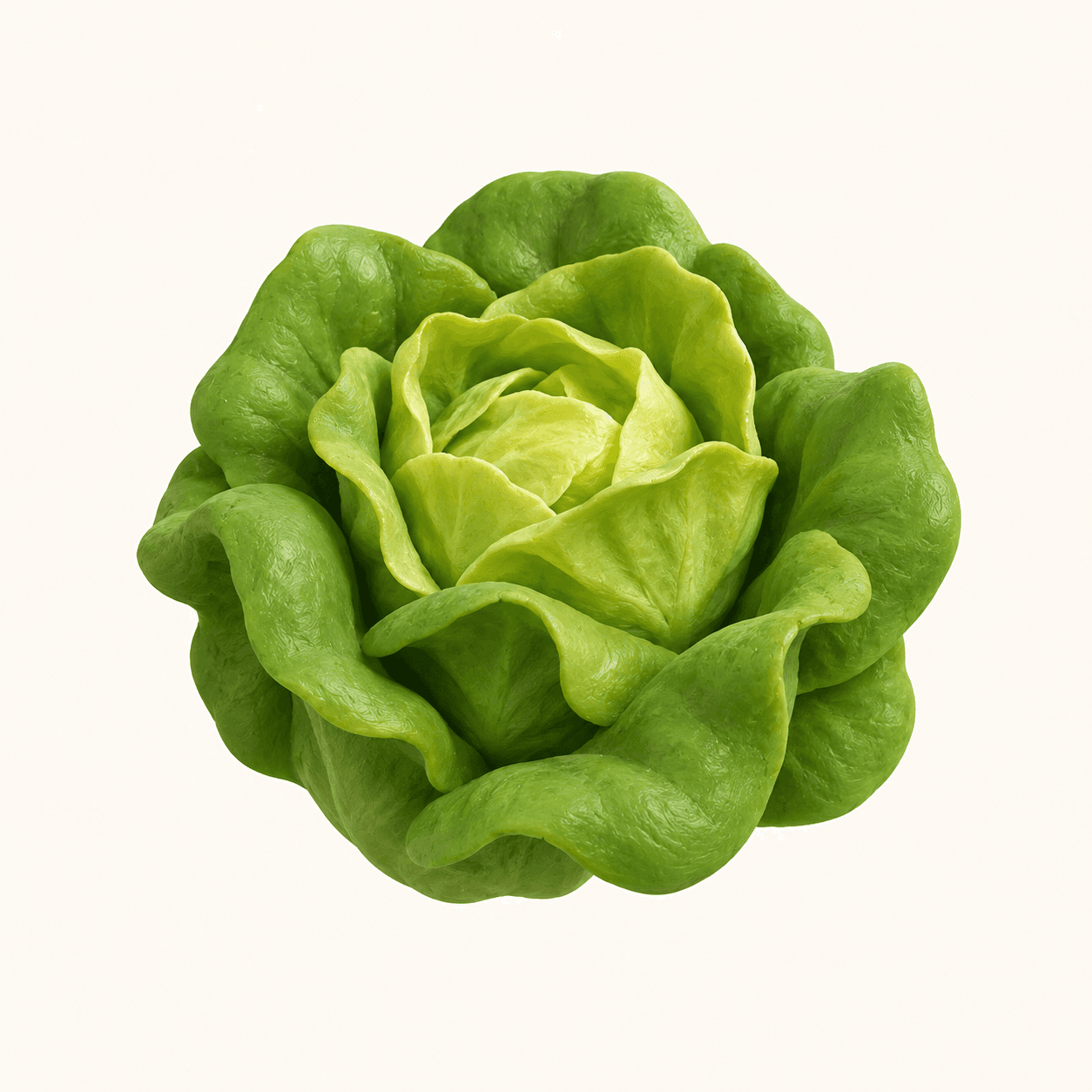
A fast, cool weather leaf crop that you can pick from for weeks. It is at its best in spring and autumn, and turns bitter in a hot, dry spell.
At a glance
Difficulty
Easy
Sunlight
Part sun
4 to 6 hours of sun a day Water
Thirsty
First harvest
50 to 70 days
from sowing
Growing in a pot
1 gal or bigger
Plant spacing
5 to 12 in apart


More about this plant
Lettuce is the quickest reward in a first garden. Sow a short row every couple of weeks rather than one long row, keep it damp, and give it afternoon shade once the weather warms.
- Grows for one season.
- Can grow in raised beds, the open ground.
- Fine in a small space.
- A good one to grow together with children.
- Ready to pick quickly.
Optional local dates
Planting dates where you live
The growing guide above works anywhere. This section adds local frost dates when we have them.
Optional local dates
 Optional local dates
Get planting dates for where you live
Save a city or a U.S. ZIP so we can turn local frost records into useful dates. Every crop guide still works without this.
A U.S. ZIP uses official NOAA frost records. Other countries use weather-station records, or a climate reconstruction where stations are missing. Coordinates are used once and not stored. We save only a place label and climate summary in a private browser cookie. You can clear it anytime.
Helpful gardening guides
- Beginner Gardening Mistakes
- Companion Planting Guide
- Container Size Guide
- Frost Date Guide
- Gardening Tips
- How to Grow Plants
- How to Grow Your Own Food
- How to Start a Garden
- How to Start a Vegetable Garden
- Planting Calendar
- Raised Bed Guide
- Seed Starting Guide
- Soil pH Guide
- Sunlight Guide
- Vegetable Gardening for Beginners
- Watering Guide
When to plant
Match these relative steps to your local seasons. Where frost applies, use the last freezing night in spring and the first in fall. In frost-free climates, follow trusted local seasonal guidance.
- Sow outdoors from 4 weeks before your last spring frost to 2 weeks afterAs soon as the soil is workable.
- Sow outdoors 10 to 13 weeks before your first fall frostAbout three months before your first fall frost, for an autumn crop.

When you can start picking
- 4 to 12 weeks after your last spring frost
- From 6 weeks before your first fall frost to 1 week after

- Seeds usually sprout in 2 to 10 days.
- Ready to pick about 50 to 70 days from sowing.
- Picking lasts about 6 weeks.
- For a steady supply, sow a few more every 12 days.
What you need
- How to start itFrom seed or a young plantYou can sow it straight into the ground, or start it indoors first.
- How deep to plant0.25 to 0.5 in
Planting depth: 0.25 to 0.5 in below the soil surface. Drawing is not to scale. - How far apart5 to 12 inLeave 18 to 30 in between rows.
Leave 5 to 12 in between plants and 18 to 30 in between rows. View from above; drawing is not to scale. - How deep the roots go6 to 12 inUseful when picking a pot or planning a raised bed.
Roots reach 6 to 12 in below the soil surface. Scale in inches; root shape is a guide. The dotted line marks the shallow end of the range. - Pot size1 gal or bigger
Choose a pot that holds 1 gal or more. Shape and plant size are a guide.


Step by step
- Sow into cool soilA quarter to half an inch deep, straight into the ground, as soon as the soil is workable in spring.
- Thin the seedlingsTo about five inches for baby leaves, or ten to twelve inches for full sized plants. Crowded lettuce stays small and bolts early.
- Keep it dampAbout an inch of water a week. Do not let it dry out: that is what turns the leaves bitter.
- Sow another short rowEvery ten to fourteen days. One long row gives you forty lettuces in a single week.
- Shade it as the weather warmsAfternoon shade buys you several weeks before it runs to seed.
- Pick the outer leavesTake from the outside and leave the middle, and one plant will crop for weeks.
Common mistakes
- Sowing it all at onceYou get a glut and then nothing. Short rows every couple of weeks give you lettuce all season.
- Letting it dry outThirst, more than variety, is what makes lettuce bitter.
- Sowing in high summerLettuce germinates poorly in hot soil and bolts quickly. Spring and late summer are its seasons.
Water
Thirsty
About an inch of water a week, and more in warm weather. A dry spell is the single commonest cause of bitter leaves.
- Too dry
- About right
- Too wet
- If it goes drySuffers quickly when dryLeaves taste bitter, and a stalk shoots up from the centre of the plant.
- If it stays wetDislikes sitting wetSlimy outer leaves and grey mould in the heart.


Looking after it
- FeedingAn occasional feed helpsA balanced feed worked in before sowing is usually enough; side dress once if growth stalls.
- ThinningThin seedlings to 5 in apartCrowded seedlings stay small. Pull the weaker ones and keep the strongest.
- MulchMulch keeps the soil cool and damp, which is what delays bolting.

Harvest
You will know it is ready when: Whenever the leaves are big enough to eat. There is no single moment it becomes ready.
Take the outer leaves and leave the centre growing, or cut the whole plant off at or just above the soil surface.
- What to expect8 to 16 oz per plantA rough guide. A good year and a bad year can differ by half.
- Keeping itKeeps 5 to 10 daysWash, spin dry and keep in a bag in the fridge.
Common problems
Slugs and snails
Can ruin the crop
The single biggest cause of failed lettuce.
What to look for: Ragged holes in leaves and silvery trails in the morning.
What to do & prevention
Prevention: Water in the morning so the ground is drier at night. Clear hiding places near the bed.
What to do: Go out after dark with a torch and collect them. Beer traps work in a small bed.
Aphids
Common, worth watching for
What to look for: Clusters on the tips and under leaves, sticky leaves, and ants running up the stems.
What to do & prevention
Prevention: Do not overfeed with nitrogen, which makes the soft growth they love. Leave a few flowers nearby for ladybirds.
What to do: Knock them off with a jet of water, or rub them off by hand. Insecticidal soap for a heavy attack.
Damping off
Common, worth watching for
What to look for: A thin, dark, pinched stem right at the surface, and a seedling lying flat.
What to do & prevention
Prevention: Use clean trays and fresh compost, do not sow too thickly, and give seedlings air movement.
What to do: There is no saving an affected seedling. Remove it, let the surface dry a little, and sow again.
Grey mould
Common, worth watching for
Starts on the outer leaves in a wet spell.
What to look for: Grey fuzz on ripening fruit, often starting where two berries touch.
What to do & prevention
Prevention: Pick ripe fruit promptly, keep fruit off the soil, and give plants room.
What to do: Remove affected fruit and leaves and put them in the bin, not the compost heap.

Is this right for you?
Cool and damp. It is happiest with nights around 50F and days no warmer than about 68F, and runs to seed in heat.
- LightPart sunAbout 4 to 6 hours of direct sun a day.
- ShadeHappy in shade
- SeasonA cool season cropUsually grown in spring or fall.
- TemperatureHappiest at 50 to 68 °FIt can survive 25 to 80 °F.
- FrostSurvives a light frost
- HeatStruggles in heat
- AirNo strong preference
- Hardiness zonesZones 2a to 11bZones describe winter cold only. They do not say when to plant.

Soil
- Soil pH6.0 to 6.8A cheap test kit from a garden centre will tell you yours.
- Soil it likesLoam, Silt
- DrainageLikes ground that holds moisture
- RichnessAverage ground is fine
Ground that holds a little moisture keeps the leaves sweet and slows bolting.
The year at a glance
Measured from your first fall frost, because seasons differ from garden to garden. In frost-free climates, use trusted local seasonal guidance alongside these relative steps.
Sow outdoors
10 to 13 weeks before your first fall frost
Picking
from 6 weeks before your first fall frost to 1 week after
Sow outdoors
from 4 weeks before your last spring frost to 2 weeks after
Picking
4 to 12 weeks after your last spring frost
Questions people ask
Why has my lettuce gone bitter?
Heat or thirst. Lettuce is a cool weather plant: a dry spell or a hot week turns the leaves bitter and pushes up a flower stalk. Keep it watered and give it afternoon shade as summer arrives.
Can I pick lettuce more than once?
Yes. Take the outer leaves and leave the growing centre alone, and a single plant will crop for several weeks.
How do I stop lettuce bolting?
Keep it cool and damp, and stop relying on one sowing. Shade in the afternoon, mulch, water, and sow a fresh short row every ten to fourteen days.
How far apart should lettuce be?
About five inches if you want baby leaves, and ten to twelve inches for full sized plants. Rows go eighteen to thirty inches apart.
Common varieties
- Loose leaf Fastest, and the most forgiving. Cut a few leaves at a time and it keeps going.
- Butterhead Soft loose heads, ready in about 60 to 70 days.
- Romaine (Cos) Upright crisp leaves; space these a little wider.
Also filed under: Vegetables
Where this came from
Advice varies with your climate and variety. Check the sources behind each section.
Sources & review dates
- Light and weather
- University of Minnesota Extension, Growing lettuce, endive and radicchio in home gardens · checked 2026-09-11 · Ideal temperature range
- Planting
- University of Minnesota Extension, Growing lettuce, endive and radicchio in home gardens · checked 2026-09-11 · Sowing depth, spacing by type, row spacing
- Timing
- University of Minnesota Extension, Growing lettuce, endive and radicchio in home gardens · checked 2026-09-11 · Spring and fall sowing windows
- University of Illinois Extension, How to Grow Lettuce · checked 2026-09-11 · Days to maturity and succession interval
- Soil
- University of Minnesota Extension, Growing lettuce, endive and radicchio in home gardens · checked 2026-09-11 · pH range
- Water
- University of Minnesota Extension, Growing lettuce, endive and radicchio in home gardens · checked 2026-09-11 · One inch a week
- Looking after it
- University of Minnesota Extension, Growing lettuce, endive and radicchio in home gardens · checked 2026-09-11 · Feeding
- Harvest
- University of Minnesota Extension, Growing lettuce, endive and radicchio in home gardens · checked 2026-09-11 · Harvest method
- Common problems
- University of Minnesota Extension, Growing lettuce, endive and radicchio in home gardens · checked 2026-09-11 · Slugs, snails, cutworms, flea beetles
- Step by step
- University of Minnesota Extension, Growing lettuce, endive and radicchio in home gardens · checked 2026-09-11
- Questions people ask
- University of Minnesota Extension, Growing lettuce, endive and radicchio in home gardens · checked 2026-09-11