How to Grow Basil
Ocimum basilicum
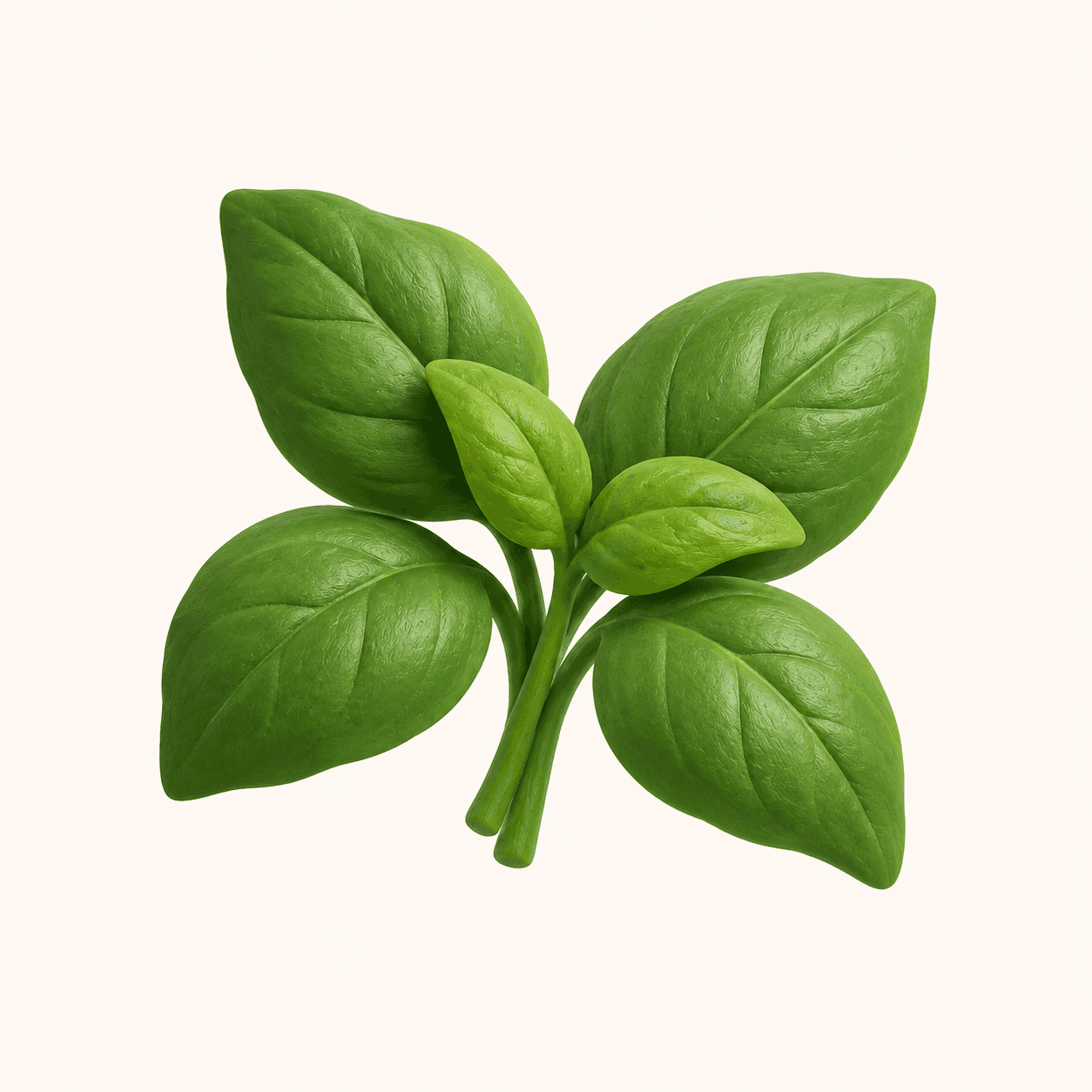
A tender summer herb that grows fast, hates cold nights, and gives more the more often you cut it.
At a glance
Difficulty
Easy
Sunlight
Full sun
6 to 8 hours of sun a day Water
Average thirst
First harvest
50 to 75 days
from sowing
Growing in a pot
2 gal or bigger
Plant spacing
6 to 12 in apart


More about this plant
Basil is one of the easiest things to grow and one of the easiest to ruin. Do not put it out until nights are warm, cut the growing tips regularly instead of picking single leaves, and pinch off flower buds the moment you see them.
- Grows for one season.
- Can grow in indoors, the open ground.
- Fine in a small space.
- A good one to grow together with children.
- Ready to pick quickly.
Optional local dates
Planting dates where you live
The growing guide above works anywhere. This section adds local frost dates when we have them.
Optional local dates
 Optional local dates
Get planting dates for where you live
Save a city or a U.S. ZIP so we can turn local frost records into useful dates. Every crop guide still works without this.
A U.S. ZIP uses official NOAA frost records. Other countries use weather-station records, or a climate reconstruction where stations are missing. Coordinates are used once and not stored. We save only a place label and climate summary in a private browser cookie. You can clear it anytime.
Helpful gardening guides
- Beginner Gardening Mistakes
- Companion Planting Guide
- Container Size Guide
- Frost Date Guide
- Gardening Tips
- How to Grow Plants
- How to Grow Your Own Food
- How to Start a Garden
- How to Start a Vegetable Garden
- Planting Calendar
- Raised Bed Guide
- Seed Starting Guide
- Soil pH Guide
- Sunlight Guide
- Vegetable Gardening for Beginners
- Watering Guide
When to plant
Match these relative steps to your local seasons. Where frost applies, use the last freezing night in spring and the first in fall. In frost-free climates, follow trusted local seasonal guidance.
- Start indoors 6 to 8 weeks before your last spring frostSix to eight weeks before you plan to plant outside.
- Plant out 1 to 4 weeks after your last spring frostOnly once the danger of spring frost has passed.
- Sow outdoors 2 to 5 weeks after your last spring frostDirect sowing works once the soil is properly warm.

When you can start picking
- 6 to 20 weeks after your last spring frost

- Seeds usually sprout in 5 to 7 days.
- Ready to pick about 50 to 75 days from sowing.
- Picking lasts about 14 weeks.
- For a steady supply, sow a few more every 21 days.
What you need
- How to start itFrom seed or a young plantYou can sow it straight into the ground, or start it indoors first.
- How deep to plant0.25 in
Planting depth: 0.25 in below the soil surface. Drawing is not to scale. - How far apart6 to 12 inLeave 18 to 24 in between rows.
Leave 6 to 12 in between plants and 18 to 24 in between rows. View from above; drawing is not to scale. - How deep the roots go6 to 12 inUseful when picking a pot or planning a raised bed.
Roots reach 6 to 12 in below the soil surface. Scale in inches; root shape is a guide. The dotted line marks the shallow end of the range. - Pot size2 gal or bigger
Choose a pot that holds 2 gal or more. Shape and plant size are a guide.


Step by step
- Sow shallow, and warmCover the seed with about a quarter of an inch of soil. It should come up in five to seven days somewhere warm.
- Thin to one strong plantOnce seedlings have two to three pairs of true leaves, thin or space them six to twelve inches apart. Crowded basil gets mildew.
- Wait for warm nightsPlant out only after the danger of frost has passed. Cold nights blacken the leaves and the plant never really recovers.
- Pinch the tipsEvery week or so, cut the top two to three inches of each stem just above a pair of leaves. The plant branches from every cut.
- Remove flower buds on sightOnce basil flowers it puts its energy into seed and the leaves turn bitter and coarse.
- Water deeply, not oftenEvery seven to ten days in the ground, more for pots. Morning is better than evening so the leaves dry.
Common mistakes
- Putting it out too earlyBasil is as frost tender as a tomato and sulks below about 50F. There is no advantage to planting it early.
- Picking single leavesYou end up with a bare stalk and a few leaves on top. Cutting whole tips is what makes the plant bushy.
- Letting it flowerThe leaves turn bitter within days. Pinch the buds out as they appear.
- Crowding the plantsBasil downy mildew thrives where air cannot move. Give each plant six to twelve inches.
Water
Average thirst
Water deeply every seven to ten days in the ground. Plants in pots dry out faster and need checking more often. Water the soil in the morning so the leaves are dry by night.
- Too dry
- About right
- Too wet
- If it goes drySuffers quickly when dryLeaves go limp through the afternoon and recover after watering.
- If it stays wetRots quickly in wet groundStems blacken at soil level and the plant collapses quickly.


Looking after it
- FeedingRarely needs feedingOnce or twice through the season is enough in the ground. Plants in containers need feeding every three to four weeks.
- NitrogenToo much nitrogen costs some crop
- PruningNeeds pruningPrune through the whole season. Cut the growing tip just above a pair of leaves and the plant branches from the cut instead of running to a single woody stem.
- ThinningThin seedlings to 6 in apartCrowded seedlings stay small. Pull the weaker ones and keep the strongest.
- MulchA thin mulch keeps the roots cool through high summer.

Harvest
You will know it is ready when: Once a plant has two or three pairs of true leaves you can begin cutting.
Clip the top two to three inches of a stem, leaving about four leaves on the plant. Do this about once a week: it makes the plant branch and stops it flowering.
- What to expect4 to 8 oz per plantA rough guide. A good year and a bad year can differ by half.
- Keeping itKeeps 3 to 7 daysStand cut stems in a glass of water at room temperature, not in the fridge. To keep it longer, dry or freeze it; either keeps about a year.
Common problems
Aphids
Common, worth watching for
What to look for: Clusters on the tips and under leaves, sticky leaves, and ants running up the stems.
What to do & prevention
Prevention: Do not overfeed with nitrogen, which makes the soft growth they love. Leave a few flowers nearby for ladybirds.
What to do: Knock them off with a jet of water, or rub them off by hand. Insecticidal soap for a heavy attack.
Slugs and snails
Common, worth watching for
Young plants can vanish overnight.
What to look for: Ragged holes in leaves and silvery trails in the morning.
What to do & prevention
Prevention: Water in the morning so the ground is drier at night. Clear hiding places near the bed.
What to do: Go out after dark with a torch and collect them. Beer traps work in a small bed.
Damping off
Can ruin the crop
The commonest way basil seedlings are lost.
What to look for: A thin, dark, pinched stem right at the surface, and a seedling lying flat.
What to do & prevention
Prevention: Use clean trays and fresh compost, do not sow too thickly, and give seedlings air movement.
What to do: There is no saving an affected seedling. Remove it, let the surface dry a little, and sow again.
Powdery mildew
Common, worth watching for
Basil downy mildew is the one to watch for: fluffy growth on the leaf undersides.
What to look for: Pale, powdery patches on the upper side of leaves, spreading until the leaf yellows.
What to do & prevention
Prevention: Leave room between plants for air to move. Water the soil, not the leaves.
What to do: Remove the worst leaves. In a bad year, a milk or potassium bicarbonate spray slows it down.

Is this right for you?
Warm and sheltered. It wants at least six to eight hours of bright light and sulks as soon as nights turn cold.
- LightFull sunAbout 6 to 8 hours of direct sun a day.
- ShadeCopes with a little shade
- SeasonA warm season cropUsually grown in summer.
- TemperatureHappiest at 70 to 90 °FIt can survive 40 to 100 °F.
- FrostFrost kills it
- HeatLoves heat
- AirNo strong preference
- Hardiness zonesZones 2a to 11bZones describe winter cold only. They do not say when to plant.

Soil
- Soil pH6.0 to 7.5A cheap test kit from a garden centre will tell you yours.
- Soil it likesLoam
- DrainageWants well drained ground
- RichnessAverage ground is fine
A little compost is plenty. Very rich ground gives soft growth and weaker flavour.
The year at a glance
Measured from your last spring frost, because seasons differ from garden to garden. In frost-free climates, use trusted local seasonal guidance alongside these relative steps.
Start seeds indoors
6 to 8 weeks before your last spring frost
Plant out
1 to 4 weeks after your last spring frost
Sow outdoors
2 to 5 weeks after your last spring frost
Growing
about 1 weeks of growing
Picking
6 to 20 weeks after your last spring frost

Questions people ask
Why is my basil tall and spindly?
It has not been pinched, or it is short of light. Cut the growing tip above a pair of leaves every week or so and give it six to eight hours of bright light; the plant branches out instead of stretching up.
Should I let basil flower?
Not if you want leaves. Flowering turns the plant woody and the leaves bitter within days. Pinch buds off as soon as you see them.
What are the fuzzy grey patches under the leaves?
Basil downy mildew. It can kill whole plants and spreads fast in still, humid air. Give plants room, water the soil rather than the leaves, and remove affected plants rather than trying to save them.
Can basil live indoors all year?
It can on a bright windowsill, but it will be slower and smaller in winter. It wants as much light as you can give it.
Common varieties
- Genovese The classic large-leaved pesto basil.
- Thai Spicier, with sturdier leaves that hold up to heat in cooking.
Also filed under: Herbs
Where this came from
Advice varies with your climate and variety. Check the sources behind each section.
Sources & review dates
- Light and weather
- University of Minnesota Extension, Growing basil in home gardens · checked 2026-09-11 · Light requirement
- Planting
- University of Minnesota Extension, Growing basil in home gardens · checked 2026-09-11 · Sowing depth and spacing
- Timing
- University of Minnesota Extension, Growing basil in home gardens · checked 2026-09-11 · Germination days and the indoor start window
- Soil
- University of Minnesota Extension, Growing basil in home gardens · checked 2026-09-11 · pH range
- Water
- University of Minnesota Extension, Growing basil in home gardens · checked 2026-09-11 · Watering interval
- Looking after it
- University of Minnesota Extension, Growing basil in home gardens · checked 2026-09-11 · Pruning and feeding
- Harvest
- West Virginia University Extension, Growing Basil · checked 2026-09-11 · Harvest method and weekly tipping
- Common problems
- University of Minnesota Extension, Growing basil in home gardens · checked 2026-09-11 · Downy mildew
- Step by step
- University of Minnesota Extension, Growing basil in home gardens · checked 2026-09-11
- Questions people ask
- University of Minnesota Extension, Growing basil in home gardens · checked 2026-09-11